Case will remain on hold as Concordia University Texas asks the nation’s highest court to weigh in on a First Amendment church-governance dispute
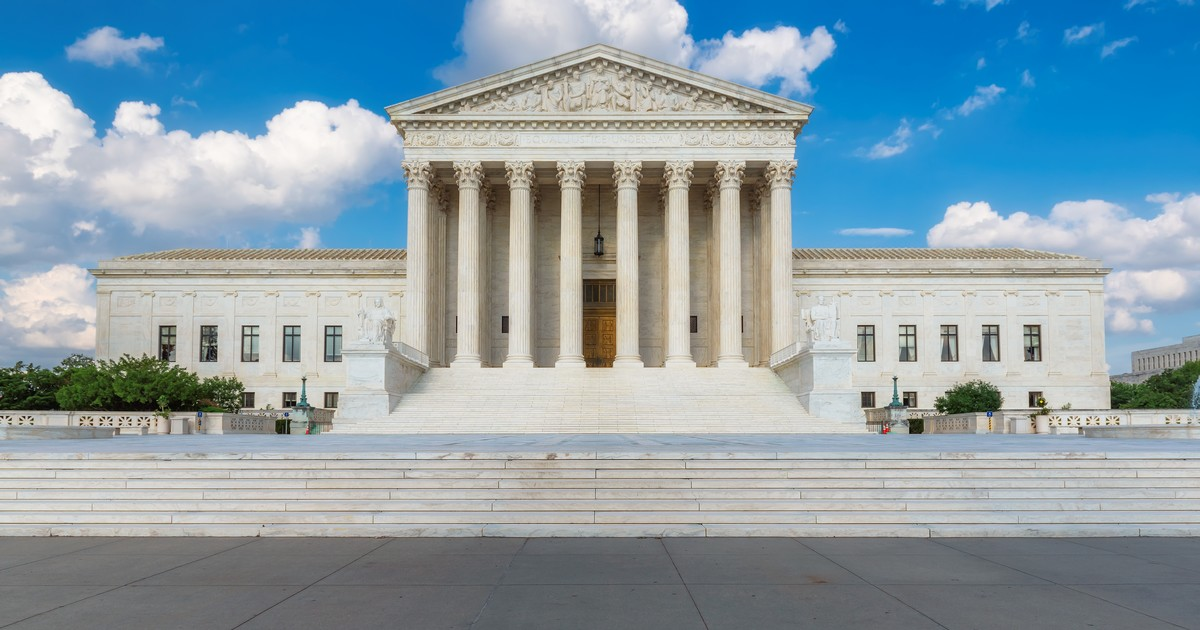
A federal judge in Austin has agreed to freeze proceedings in a strenuously contested lawsuit between the Lutheran Church—Missouri Synod and Concordia University Texas while the university asks the U.S. Supreme Court to review a Fifth Circuit Court of Appeals ruling that revived the church’s case.
Senior U.S. District Judge David Alan Ezra signed the agreed order on July 20, 2026, at the joint request of both sides. Under its terms, the case is paused until October 8, 2026, unless Concordia University Texas, Inc., along with its president Donald Christian and former board chairman Christopher Bannwolf, file by October 7 a petition asking the Supreme Court to hear the case. If they do, the pause extends further, either until the Supreme Court declines to take up the case, or, if the justices agree to hear it, until they issue a final ruling.
The order carves out one exception: the church may still move forward with formally naming and serving individual defendants who, until now, have appeared in the case only as unidentified “John Doe” board members.
A copy of the order is available here.
The Fifth Circuit Ruling that Would Be Reviewed
The decision Concordia hopes the Supreme Court will review is a June 4, 2026 opinion from a three-judge panel of the U.S. Court of Appeals for the Fifth Circuit, which handed the Lutheran Church a significant win, reviving a lawsuit that a lower federal court had previously dismissed from federal court and leaving the case to be handled instead by the courts of the State of Texas.
The underlying conflict centers on who controls Concordia University Texas, an Austin-based Lutheran university. In November 2022, Concordia’s Board of Regents voted unilaterally to reject the governing authority of the Lutheran Church—Missouri Synod, amending the university’s internal governance documents without denominational approval. The church’s Commission on Constitutional Matters, the body responsible for provisionally resolving governance disputes within the denomination, declared those changes void. In August 2023, the church’s national convention, its highest governing authority, ratified that ruling and attempted to seat new members on Concordia’s board. The university refused to recognize them, insisting its existing board remained in charge.
That impasse led the church’s corporate arm, the Lutheran Church—Missouri Synod (“LCMS”), a Missouri nonprofit that handles the denomination’s civil and business affairs, to sue Concordia, Christian, and Bannwolf in federal court, relying on diversity jurisdiction, the legal principle allowing citizens of different states to sue one another in federal court. Concordia countersued in state court, and the cases were consolidated.
A Dispute Over Who Can Even Bring the Case
Rather than contesting the governance dispute head-on, Concordia argued that LCMS wasn’t the proper party to sue. The university contended that “the Synod,” the church’s spiritual, ecclesiastical body, which the denomination considers theologically distinct from its corporate arm under Lutheran “two kingdoms” doctrine, was the true party with a stake in the case. Because the Synod, in Concordia’s view, was an unincorporated association with members across many states, including Texas, its presence would destroy the complete diversity needed for federal jurisdiction.
A magistrate judge agreed, and the district court adopted that reasoning, dismissing the church’s lawsuit from federal court for lack of federal jurisdiction. In doing so, the district court concluded it could interpret the church’s bylaws and governing documents using ordinary secular legal analysis without raising constitutional concerns.
The Appeals Court’s Reversal
Writing for the Fifth Circuit panel, Circuit Judge Edith H. Jones held that the lower court’s approach violated the church autonomy doctrine, a First Amendment principle barring civil courts from second-guessing a religious institution’s internal governance and self-understanding. The panel found the district court had improperly substituted its own secular reading of the church’s constitution and bylaws for the church’s own theological explanation of its structure, specifically, the “two kingdoms” doctrine distinguishing the Synod’s spiritual governance from LCMS’s civil and business role.
The panel also rejected arguments that a narrow legal exception permitting courts to resolve church property disputes using neutral secular principles applied here, concluding the case centers on church governance and hierarchy rather than a straightforward property question. On the jurisdictional question, the panel held that LCMS, not the Synod, is the proper party for diversity purposes, given its role owning church property, entering contracts, and formally representing the church’s legal interests.
Chief Judge Jennifer Walker Elrod concurred but favored resolving the case on more conventional corporate-law grounds saying that even if it were proper to analyze LCMS’ corporate documents by secular interpretation, the district court had done so incorrectly. Circuit Judge James E. Graves Jr. dissented, warning the majority stretched the church autonomy doctrine too far and that the ruling could let some religious organizations shield themselves from federal court based purely on how they structure their internal affairs. But the majority note that the designation of the LCMS corporation actually had the opposite effect of ensuring that there will be a responsible party with capacity to sue, be sued, and answer for the denomination.
What’s Next
With the Fifth Circuit’s ruling now paused by agreement of both sides, the case’s future turns on whether the Supreme Court agrees to take it up and, if so, how the justices resolve the tension between deference to religious institutions’ self-governance and the practical rules governing who may sue and be sued in federal court.
Appendix: Appeal vs. Certiorari, Explained
1. The Appeal “As of Right”
When a federal trial ends, the losing party generally has an automatic right to appeal to a federal circuit court. This first appeal exists mainly for error correction: the appellate judges check that the law was applied correctly and the trial was fair. The court has no choice in the matter — it must consider the case on its merits.
2. The Shift at the Supreme Court
Above that level, the rules change completely. Over 99% of the Supreme Court’s docket arrives not as a mandatory appeal but through a writ of certiorari (“cert”) — a discretionary request that the Court agree to hear the case.
A standard appeal is mandatory: the court must hear it, and its purpose is to fix errors from one case. Certiorari is discretionary: the Court chooses whether to hear it, and its purpose is to resolve issues of national importance.
The Supreme Court isn’t in the business of correcting individual mistakes. It steps in only when a case carries broad, nationwide consequences.
3. What Makes the Court Say Yes
With thousands of petitions filed each year and fewer than 100 granted, the Justices look for reasons that matter beyond the parties involved:
- Circuit splits — different federal appeals courts have reached opposite conclusions on the same federal law or constitutional question (e.g., a statute upheld in one circuit, struck down in another). Only the Supreme Court can create one national rule.
- State–federal conflicts — a state supreme court’s ruling on a federal issue clashes with a federal court’s interpretation of that same issue.
- Unresolved national questions — a genuinely novel legal issue, often driven by new technology or social change, that no court has yet settled.
4. Certiorari Is a Prerogative Writ
Certiorari is what’s called a prerogative writ: an extraordinary, discretionary power that no one is entitled to. Even a clear circuit split or a weighty national question doesn’t guarantee review.
Granting cert requires the Rule of Four — at least four of the nine Justices must vote to hear the case in private conference. Three votes, and the petition is denied.
Justices also reject cases for strategic reasons that have nothing to do with importance: the timing may be off, the facts may be too messy to produce a clean rule, or the Court may prefer to let lower courts keep debating the issue before settling it for good.